

Natural Joint and Muscle Support for Dogs
Natural Joint and Muscle Support: A Comprehensive Guide
Email:info@petnaturalsupplies.com
Email:info@petnaturalsupplies.com
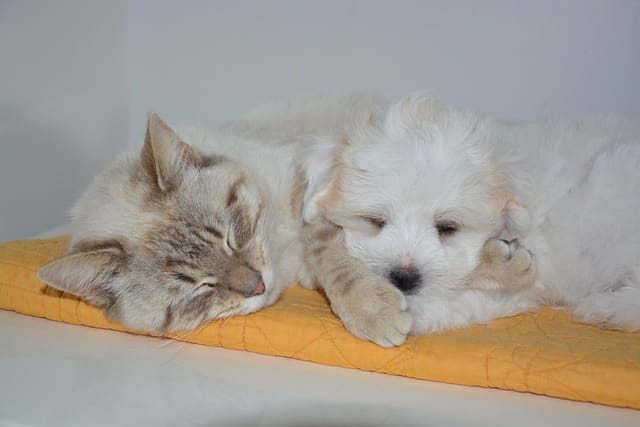
Vomiting and diarrhea are two of the most common reasons pet owners rush their dogs and cats to the veterinarian.
While occasional stomach upset may not be serious, repeated or severe episodes can quickly lead to dehydration and signal an underlying health issue.
Causes range from simple dietary indiscretion (eating something unusual) to infections, parasites, food intolerances, inflammatory conditions, or even more serious diseases.
At home, pet owners can sometimes help their animal by providing rest, hydration, bland foods, or natural supports such as canned pumpkin, slippery elm, or probiotics.
However, it is critical to know when home care is appropriate and when veterinary care is urgently required.
When a dog or cat vomits, their stomach muscles contract forcefully to expel food or fluid through the mouth.
This is the body’s way of removing irritants, toxins, or indigestible material.
Diarrhea, on the other hand, happens when the intestines move food too quickly or when water is not absorbed properly.
This leads to either loose or watery stools.
Both symptoms are protective in nature — they help the body “clean itself out.”
But when they last too long, they can do more harm than good by causing fluid and electrolyte loss.
This is especially risky for kittens, puppies, and senior pets.
Research in veterinary medicine identifies a wide range of causes:
• Dietary indiscretion – Dogs, in particular, are prone to eating garbage, spoiled food, or foreign objects (German et al., 2017). Cats may chew on plants or ingest hair during grooming.
• Dietary intolerances and allergies – Food intolerances can trigger vomiting and diarrhea through immune and non-immune pathways (Pereira et al., 2019).
• Infectious agents – Viruses (parvovirus in dogs, panleukopenia in cats), bacteria (Salmonella, Campylobacter, Clostridium), and parasites (Giardia, roundworms, coccidia) are major causes (Day, 2020).
• Toxins and medications – Certain human foods (grapes, onions, chocolate) and medications (NSAIDs, some antibiotics) may trigger gastrointestinal signs (Pet Poison Helpline, 2022).
• Chronic disease – Conditions like pancreatitis, inflammatory bowel disease (IBD), liver disease, or kidney disease can present with recurrent vomiting and diarrhea (Washabau & Day, 2013).
• Stress and anxiety – Cats are particularly prone to stress-induced diarrhea through gut-brain axis changes (Carney et al., 2019).
• Probiotics – Multiple veterinary clinical trials support the use of probiotics for acute and chronic diarrhea in dogs (Bybee et al., 2011; Kelley et al., 2009). In cats, results are more limited but suggest benefit in stress-related diarrhea (Marshall-Jones et al., 2006). Probiotics may improve gut microbial balance, enhance mucosal barrier function, and modulate immune activity.
• Pumpkin (Cucurbita spp.) – Widely used by pet owners as a fiber supplement. Pumpkin is high in soluble fiber, which can normalize stool consistency by absorbing excess water or softening hard stools. Peer-reviewed studies in pets are sparse, but extrapolation from human nutrition supports its use.
• Slippery Elm (Ulmus rubra) – This mucilaginous herb forms a soothing gel when mixed with water. Evidence from human herbal medicine suggests it can coat and protect the GI lining. Veterinary use is largely anecdotal but considered safe when given in small doses (Tilford & Wulff, 2009).
• Chamomile (Matricaria recutita) – Chamomile tea extracts may have mild anti-spasmodic and anti-inflammatory effects (Srivastava et al., 2010). In pets, controlled studies are limited, but it is often recommended as a gentle home support.
• Electrolyte solutions – Oral rehydration therapy is well-established in human and veterinary medicine as a way to replace lost sodium, potassium, and fluids (WHO, 2005). Veterinary-specific electrolyte powders and broths are available for pets.
• Few controlled trials exist for herbal and whole-food remedies in dogs and cats. Most recommendations are extrapolated from human medicine or based on clinical experience.
• Cats are particularly sensitive to certain herbs and plant compounds, making safety validation critical.
• More research is needed on dosage ranges, bioavailability, and long-term safety of nutraceuticals in pets.
General Safety Guidelines
• Always introduce any new food or supplement gradually.
• Avoid human medications (ibuprofen, aspirin, loperamide) unless specifically prescribed by a veterinarian, as they can be toxic to pets.
• Do not attempt home care if vomiting or diarrhea is severe, bloody, persistent beyond 24 hours, or accompanied by lethargy, fever, or refusal to drink water.
(These are general reference ranges; veterinary input is always advised.)
• Pumpkin:
• Dogs: 1–4 tablespoons plain canned pumpkin (not pie filling) mixed with food.
• Cats: 1–2 teaspoons mixed with food.
• Probiotics:
• Use veterinary-specific products (measured in CFU, colony-forming units). Doses typically range from 1–10 billion CFU daily depending on product and size.
• Slippery Elm Powder:
• Dogs: ¼–½ teaspoon mixed with water and given as a paste 1–2 times daily.
• Cats: A pinch (1/8 tsp) mixed into wet food.
• Chamomile Tea (mild infusion):
• Dogs: 1–2 tablespoons cooled tea added to food or water.
• Cats: Only very small amounts (½ teaspoon), as cats are more sensitive to plant compounds.
• Electrolytes:
• Veterinary oral rehydration powders are preferred. Home recipes (e.g., diluted unsalted chicken broth with added electrolyte mix) should only be used temporarily and under veterinary advice.
• Your pet vomits once but seems bright and returns to normal afterward.
• Mild diarrhea without blood, lasting less than 24 hours.
• Your dog or cat remains interested in food and water.
• Symptoms occur after eating grass, a sudden diet change, or minor stress.
1 – Hydration First – Always provide clean, fresh water. For diarrhea, consider adding a veterinary electrolyte solution.
2 – Fasting (Dogs only) – Withhold food for 12–24 hours in adult dogs (not puppies) to allow the stomach to settle. Cats should never be fasted for more than a few hours, as this risks hepatic lipidosis (fatty liver).
3 – Bland Diet – After fasting, offer small meals of boiled chicken or turkey with plain white rice, or prescription GI diets. For cats, bland options include boiled chicken or a veterinary recovery diet.
4 – Add Natural Supports – Mix in a little plain canned pumpkin, or give a safe probiotic supplement.
5 – Monitor Closely – Track stool, frequency of vomiting, hydration status, and appetite.
• Vomiting or diarrhea that is bloody, black/tarry, or projectile.
• Symptoms lasting longer than 24–48 hours.
• Severe lethargy, weakness, or collapse.
• Refusal to drink water.
• In very young, old, or chronically ill pets (they dehydrate faster).
Q: Why is my dog vomiting but acting normal?
A: Dogs may vomit occasionally from eating grass, minor dietary changes, or excitement. If the vomiting stops and your dog acts normal, it may be self-limiting. Persistent or repeated vomiting should be evaluated by a veterinarian.
Q: What home remedy can I give my cat for diarrhea?
A: A small amount of plain canned pumpkin or a veterinary probiotic may help normalize stool. Cats should never be given human medications for diarrhea without veterinary approval.
Q: Can I give Pedialyte to my dog with diarrhea?
A: Small amounts of unflavored Pedialyte may be safe, but veterinary oral rehydration products are better balanced for pets. Always check with your vet before use.
Q: Are probiotics safe for pets with upset stomachs?
A: Veterinary probiotics are generally safe and may help restore balance to the gut microbiome. Human probiotics are less reliable because they may not survive in a dog or cat’s GI tract.
Q: Should I feed my pet after vomiting?
A: For adult dogs, you may withhold food for 12–24 hours, then offer small bland meals. Cats should not be fasted for more than a few hours due to risk of liver complications.
• Bybee, S. N., Scorza, A. V., & Lappin, M. R. (2011). Effect of the probiotic Enterococcus faecium SF68 on presence of diarrhea in cats and dogs housed in an animal shelter. Journal of Veterinary Internal Medicine, 25(4), 856–860.
• Carney, H. C., et al. (2019). Feline stress and health: Implications for the feline patient. Journal of Feline Medicine and Surgery, 21(9), 799–808.
• Day, M. J. (2020). Infectious gastroenteritis in dogs and cats. In J. E. Fubini & M. J. Day (Eds.), Veterinary Internal Medicine (8th ed.). Elsevier.
• German, A. J., Holden, S. L., Moxham, G., et al. (2017). Diet and health in dogs and cats: Nutritional problems and solutions. Journal of Small Animal Practice, 58(11), 601–610.
• Kelley, R. L., Minikhiem, D., Kiely, B., O’Mahony, L., & O’Sullivan, D. (2009). Clinical benefits of probiotic canine-derived Bifidobacterium animalis strain AHC7 in dogs. Veterinary Therapeutics, 10(3), 121–130.
• Marshall-Jones, Z. V., Baillon, M. L., & Croft, J. M. (2006). Effects of a probiotic Enterococcus faecium SF68 on the health and faecal flora of cats. Veterinary Record, 158(21), 669–672.
• Pereira, G. Q., Gomes, M. S., & Gomes, J. C. (2019). Food hypersensitivity in dogs and cats: A review. Critical Reviews in Food Science and Nutrition, 59(14), 2323–2339.
• Pet Poison Helpline. (2022). Toxic foods for pets. Retrieved from https://www.petpoisonhelpline.com
• Srivastava, J. K., Shankar, E., & Gupta, S. (2010). Chamomile: A herbal medicine of the past with bright future. Molecular Medicine Reports, 3(6), 895–901.
• Tilford, G., & Wulff, M. (2009). Herbs for pets: The natural way to enhance your pet’s life. BowTie Press.
• Washabau, R. J., & Day, M. J. (2013). Canine and feline gastroenterology. Elsevier Health Sciences.
• World Health Organization (WHO). (2005). Oral rehydration salts: Production of the new ORS. WHO Press.
⚠️ Disclaimer: This article is for educational purposes only and is not a substitute for professional veterinary advice. Always consult your veterinarian before making changes to your pet’s diet, supplements, or healthcare routine.
Natural Joint and Muscle Support: A Comprehensive Guide

Muscle Atrophy in Dogs and Cats: A Comprehensive Guide

Complete Guide for Dogs and Cats

Understanding UTIs in Your Pet
PetNaturalSupplies is a source-cited information resource for rabbit, guinea pig, and chinchilla owners.
Every answer names the published reference behind it — no guessing, no AI-generated facts.
“Your pet’s health, naturally.” © 2026 PetNaturalSupplies. All Rights Reserved.