

Natural Joint and Muscle Support for Dogs
Natural Joint and Muscle Support: A Comprehensive Guide
Email:info@petnaturalsupplies.com

Congestive heart failure (CHF) in pets happens when the heart can no longer pump blood effectively, leading to fluid buildup in the lungs, chest, or abdomen.
In dogs, CHF often comes from worn-out heart valves or weakened heart muscle.
In cats, it usually develops because of heart muscle disease (cardiomyopathy).
Pet owners may notice coughing, fast or labored breathing, weakness, fainting spells, or a swollen belly.
CHF is serious, but with proper veterinary treatment, some pets can live longer and more comfortably.
Alongside medications, natural options such as omega-3 fatty acids, taurine, or Coenzyme Q10 may help support heart health, though these should only be used with a veterinarian’s guidance.
Think of the heart as a pump that keeps blood moving. When that pump weakens, blood backs up in the system, and fluid seeps into areas where it doesn’t belong.
• Left-sided CHF → fluid leaks into the lungs (causing coughing and difficulty breathing).
• Right-sided CHF → fluid builds in the belly or limbs (causing swelling or distension).
In dogs, CHF most often stems from degenerative mitral valve disease or dilated cardiomyopathy.
In cats, the leading cause is hypertrophic cardiomyopathy, where the heart walls become abnormally thick.
• Dogs: CHF is more common in small to medium breeds (Cavalier King Charles Spaniels, Dachshunds, Miniature Poodles) due to valve degeneration, and in large breeds (Dobermans, Boxers) due to dilated cardiomyopathy (Boswood et al., 2016).
• Cats: Cardiomyopathy affects an estimated 10–15% of the feline population, with hypertrophic cardiomyopathy being the most frequent cause of CHF (Payne et al., 2015).
When the heart’s pumping ability declines:
• The body activates compensatory mechanisms (hormonal and nervous system responses) to maintain circulation.
• Over time, these mechanisms worsen the disease by causing fluid retention and further strain on the heart (Oyama & Sisson, 2017).
• Radiographs (X-rays): Identify pulmonary edema and heart enlargement.
• Echocardiography: Gold standard for diagnosing underlying heart disease.
• Biomarkers: NT-proBNP and troponin I can aid in assessing heart stress (Hori et al., 2018).
Veterinarians typically use a combination of therapies:
• Diuretics (e.g., furosemide): Reduce fluid buildup.
• ACE inhibitors (enalapril, benazepril): Dilate blood vessels and reduce workload on the heart.
• Pimobendan: Improves heart muscle contraction (especially in dogs).
• Oxygen therapy & hospitalization: For acute crises.
📌 Limitation: These treatments manage symptoms but do not cure CHF. Lifelong monitoring and dose adjustments are needed.
Natural therapies should never replace prescribed medications, but some may complement veterinary treatment.
• Mechanism: Anti-inflammatory, reduce cachexia (muscle loss), may improve heart rhythm stability.
• Evidence: Studies in dogs suggest benefits in reducing arrhythmias and improving quality of life (Freeman et al., 1998).
• Species notes: Generally safe for dogs and cats when dosed correctly.
• Cats: Essential amino acid; deficiency directly linked to dilated cardiomyopathy.
• Dogs: Certain breeds (e.g., American Cocker Spaniels) may benefit from supplementation (Kittleson et al., 1997).
• Mechanism: Antioxidant, supports mitochondrial energy production.
• Evidence: Small-scale studies in dogs show potential improvement in heart muscle efficiency (Teshima et al., 2007).
• Traditional use: Widely studied in human cardiology as a cardiac tonic.
• Evidence in pets: Limited veterinary trials; potential vasodilatory and inotropic effects.
• Caution: May interact with ACE inhibitors or digoxin.
• Role: Facilitates fatty acid metabolism in the heart.
• Evidence: May benefit dogs with dilated cardiomyopathy, especially Boxers and Dobermans (Keene et al., 1991).
Cats have unique amino acid requirements (taurine essentiality). Dogs metabolize some supplements differently.
• Interactions: Natural supplements can interact with prescription medications. Example: Hawthorn may potentiate the effects of cardiac drugs.
• Dosing: Always confirm with a veterinarian. Published ranges vary; safety margins are narrow in some species.
• Quality: Use veterinary-formulated supplements to avoid contamination or incorrect dosing.
• Watch for signs: coughing, panting at rest, reduced activity, fainting, belly swelling.
• Vet partnership: Regular rechecks, medication adjustments, bloodwork.
• Lifestyle adjustments: Low-salt diet (if recommended), maintaining healthy weight, avoiding stress and overheating.
• Integrative care: Ask your vet about omega-3s, taurine, or CoQ10 to support heart health alongside prescribed drugs.
Q: What are early signs of congestive heart failure in dogs?
Coughing, rapid breathing, reduced exercise tolerance, and fainting spells are common early signs of CHF in dogs.
Q: Can cats develop congestive heart failure?
Yes, cats often develop CHF due to hypertrophic cardiomyopathy, which thickens the heart muscle and impairs blood flow.
Q: Are there natural remedies for congestive heart failure in pets?
Natural options such as omega-3 fatty acids, taurine, CoQ10, or hawthorn may support heart health, but they must always be used alongside veterinary care.
Q: How long can a dog live with congestive heart failure?
Survival varies. With treatment, many dogs live 6–24 months after diagnosis, though this depends on the severity of disease and response to therapy.
Q: Is taurine important for cats with heart disease?
Yes. Taurine is essential for cats, and deficiency can cause dilated cardiomyopathy leading to heart failure.
• Boswood, A., Häggström, J., Gordon, S. G., Wess, G., Stepien, R. L., Oyama, M. A., … & French, A. T. (2016). Effect of pimobendan in dogs with preclinical myxomatous mitral valve disease and cardiomegaly. Journal of Veterinary Internal Medicine, 30(6), 1765–1779.
• Freeman, L. M., Rush, J. E., Kehayias, J. J., Ross, J. N., Meydani, S. N., Brown, D. J., & Dolnikowski, G. G. (1998). Nutritional alterations and the effect of fish oil supplementation in dogs with heart failure. Journal of Veterinary Internal Medicine, 12(6), 440–448.
• Hori, Y., Tsuboi, M., Iwanaga, K., & Uechi, M. (2018). Diagnostic utility of NT-proBNP for left-sided congestive heart failure in dogs. Journal of Veterinary Medical Science, 80(3), 469–475.
• Keene, B. W., Panciera, D. P., Atkins, C. E., Regitz, V., & Schmidt, M. J. (1991). Myocardial carnitine deficiency in a family of dogs with dilated cardiomyopathy. Journal of the American Veterinary Medical Association, 198(4), 647–650.
• Kittleson, M. D., Keene, B., Pion, P. D., & Loyer, C. G. (1997). Results of the multicenter spaniel trial (MUST): taurine- and carnitine-responsive dilated cardiomyopathy in American Cocker Spaniels. Journal of Veterinary Internal Medicine, 11(4), 204–211.
• Oyama, M. A., & Sisson, D. D. (2017). Cardiac biomarkers in veterinary medicine. In Textbook of Veterinary Internal Medicine (8th ed., pp. 1095–1102). Elsevier.
• Payne, J. R., Brodbelt, D. C., & Luis Fuentes, V. (2015). Cardiomyopathy prevalence in 780 apparently healthy cats in rehoming centers (the CatScan study). Journal of Veterinary Cardiology, 17(S1), S244–S257.
• Teshima, K., Asano, K., Iwanaga, K., Koie, H., & Watari, T. (2007). Plasma coenzyme Q10 concentrations in dogs with mitral valve disease. Journal of Veterinary Medical Science, 69(9), 935–939.
⚠️ Disclaimer: This article is for educational purposes only and is not a substitute for professional veterinary advice. Always consult your veterinarian before making changes to your pet’s diet, supplements, or healthcare routine.
Natural Joint and Muscle Support: A Comprehensive Guide

Muscle Atrophy in Dogs and Cats: A Comprehensive Guide

Complete Guide for Dogs and Cats
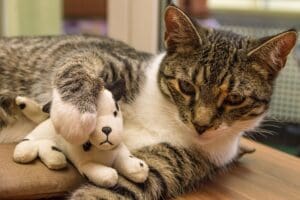
Understanding UTIs in Your Pet
PetNaturalSupplies is a source-cited information resource for rabbit, guinea pig, and chinchilla owners.
Every answer names the published reference behind it — no guessing, no AI-generated facts.
“Your pet’s health, naturally.” © 2026 PetNaturalSupplies. All Rights Reserved.