

Natural Joint and Muscle Support for Dogs
Natural Joint and Muscle Support: A Comprehensive Guide
Email:info@petnaturalsupplies.com
Email:info@petnaturalsupplies.com
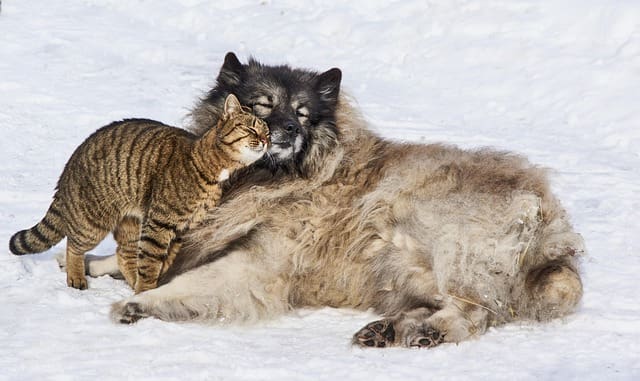
Autoimmune diseases in pets are conditions where the immune system mistakenly attacks the body’s own cells, tissues, or organs.
In dogs and cats, this can cause a wide variety of health problems ranging from skin lesions and joint pain to life-threatening blood disorders.
While some autoimmune diseases have known triggers, many remain poorly understood.
Conventional treatment often relies on immunosuppressive drugs, but growing interest exists in integrative approaches, including nutrition, stress reduction, and plant-based support.
The immune system is like a security team designed to protect the body against invading bacteria, viruses, and parasites. It does this by recognizing “self” (the body’s own cells) versus “non-self” (foreign invaders). In autoimmune disease, this recognition system breaks down.
Instead of only fighting harmful microbes, the immune system also begins to attack the body itself.
The immune system is like a security team designed to protect the body against invading bacteria, viruses, and parasites. It does this by recognizing “self” (the body’s own cells) versus “non-self” (foreign invaders). In autoimmune disease, this recognition system breaks down. Instead of only fighting harmful microbes, the immune system also begins to attack the body itself.
In dogs and cats, this process may target different tissues:
• Red blood cells → Immune-mediated hemolytic anemia (IMHA)
• Platelets → Immune-mediated thrombocytopenia (ITP)
• Skin → Pemphigus complex, lupus erythematosus
• Joints → Immune-mediated polyarthritis
• Multiple organs → Systemic lupus erythematosus (SLE)
The results can be unpredictable, chronic, and sometimes life-threatening.
• Dogs: More prone than cats to autoimmune conditions (Day, 2011). IMHA and ITP are among the most common, with breeds like Cocker Spaniels, Poodles, and Old English Sheepdogs showing higher risk (Reimer et al., 1999).
• Cats: Less commonly affected, but cases of autoimmune skin disease (pemphigus foliaceus) and autoimmune hemolytic anemia have been reported (Gross et al., 2005).
While the exact causes are unknown, several risk factors are recognized:
• Genetics: Certain breeds are predisposed, suggesting a heritable component (Day, 2019).
• Environmental triggers: Vaccines, infections, drugs (e.g., sulfonamides), or toxins may trigger disease in genetically susceptible animals (Dodds, 2017).
• Hormones: Some autoimmune diseases are more common in middle-aged female dogs, possibly due to hormonal influences (Day, 2011).
• Nutrition & gut health: Emerging research (mostly in humans) links gut microbiome imbalance to autoimmune disease (Belkaid & Hand, 2014). Although direct veterinary evidence is limited, the principle may extend to pets.
Current veterinary medicine typically employs:
• Corticosteroids (e.g., prednisone): To suppress immune overreaction.
• Immunosuppressive drugs (azathioprine, cyclosporine, mycophenolate): Used in severe or refractory cases.
• Supportive care: Transfusions for IMHA, antibiotics if secondary infections occur.
While effective at reducing immune attack, these drugs can cause side effects (weight gain, diabetes risk, increased infection susceptibility). Thus, interest is growing in supportive strategies that may help reduce reliance on strong drugs.
• Omega-3 Fatty Acids (Fish or Algal Oil): Shown in canine studies to reduce inflammatory mediators and support skin/joint health (Hall et al., 2011). While not curative, they may help modulate autoimmune inflammation.
• Vitamin D: Plays a regulatory role in immune balance in humans (Chun et al., 2014). Veterinary data are sparse, but low vitamin D status has been associated with chronic disease in dogs (Kallfelz & Van Saun, 2014). Supplementation must be carefully dosed, as dogs and cats are prone to vitamin D toxicity.
• Curcumin (Turmeric Extract): Demonstrates anti-inflammatory and immunomodulatory effects in laboratory studies (Jurenka, 2009). While veterinary clinical trials are limited, curcumin may support balanced immune responses when used with veterinary guidance.
• Probiotics & Gut Health: Canine studies suggest probiotics may improve immune regulation and reduce inflammatory responses (Schmitz & Suchodolski, 2016).
• Milk Thistle (Silybum marianum): Traditionally used for liver support, which is relevant when pets are receiving long-term immunosuppressive drugs (Kidd, 2009).
• CBD Oil (Cannabidiol): Preclinical evidence shows immunomodulatory potential, though veterinary data remain limited and regulatory status varies (Kogan et al., 2019).
⚠️ Importantly, these natural agents should be considered supportive, not replacements for conventional care, especially in life-threatening autoimmune conditions.
• Most autoimmune studies in pets are retrospective case reports or small observational studies.
• Few controlled clinical trials test integrative therapies in veterinary autoimmune disease.
• Extrapolation from human autoimmune research is common, but species differences limit direct application.
• Omega-3s: Generally safe; excess may cause diarrhea or slow clotting. Canine dose: 50–100 mg/kg EPA+DHA daily (Hall et al., 2011). Feline dose must be lower and introduced slowly.
• Curcumin: Poor absorption; veterinary-specific formulations (with piperine or liposomal delivery) improve uptake. Monitor for GI upset.
• Vitamin D: Only under veterinary supervision; overdose can cause kidney damage.
• Probiotics: Usually safe; product quality varies widely. Look for veterinary strains (Enterococcus faecium SF68, Bifidobacterium spp.).
• Milk Thistle: Safe, but dosing depends on standardized silymarin extract; can interact with liver-metabolized drugs.
• CBD: Potential interactions with cytochrome P450-metabolized drugs; limited dosing safety data.
Always consult a veterinarian before starting supplements, especially since autoimmune pets are often on powerful medications that can interact with natural compounds.
If your pet has an autoimmune disease, here are some supportive steps (always alongside your vet’s care plan):
• Nutrition: Feed a balanced, high-quality diet. Discuss omega-3 supplementation with your vet.
• Gut Support: Consider probiotics to help regulate immune balance.
• Reduce Triggers: Avoid unnecessary drugs, chemical flea/tick preventives, or vaccines unless medically essential (tailored vaccine protocols are sometimes recommended).
• Stress Management: Stress can influence immune function; keep routines calm and predictable.
• Monitor Closely: Autoimmune diseases often flare up; track symptoms and communicate with your vet.
These steps won’t cure autoimmune disease, but they may help improve your pet’s resilience and quality of life.
• Belkaid, Y., & Hand, T. W. (2014). Role of the microbiota in immunity and inflammation. Cell, 157(1), 121–141. https://doi.org/10.1016/j.cell.2014.03.011
• Chun, R. F., Liu, P. T., Modlin, R. L., Adams, J. S., & Hewison, M. (2014). Impact of vitamin D on immune function: Lessons learned from genome-wide analysis. Frontiers in Physiology, 5, 151. https://doi.org/10.3389/fphys.2014.00151
• Day, M. J. (2011). Immune-mediated disease in the dog and cat. Journal of Comparative Pathology, 144(1), 45–60. https://doi.org/10.1016/j.jcpa.2010.10.003
• Day, M. J. (2019). Genetic and environmental risk factors for canine autoimmune disease. Veterinary Immunology and Immunopathology, 209, 18–24. https://doi.org/10.1016/j.vetimm.2018.12.002
• Dodds, W. J. (2017). Vaccination protocols for dogs predisposed to autoimmune disease. Journal of the American Holistic Veterinary Medical Association, 46(3), 32–38.
• Gross, T. L., Ihrke, P. J., Walder, E. J., & Affolter, V. K. (2005). Skin diseases of the dog and cat: Clinical and histopathologic diagnosis. Blackwell.
• Hall, J. A., Picton, R. A., Skinner, M. M., Jewell, D. E., & Wander, R. C. (2011). The (n-3) fatty acid dose, independent of the (n-6) to (n-3) fatty acid ratio, affects plasma fatty acid profile and cytokine mRNA abundance in healthy dogs. Journal of Nutrition, 141(12), 2002–2008. https://doi.org/10.3945/jn.111.144980
• Jurenka, J. S. (2009). Anti-inflammatory properties of curcumin, a major constituent of Curcuma longa: A review of preclinical and clinical research. Alternative Medicine Review, 14(2), 141–153.
• Kallfelz, F. A., & Van Saun, R. J. (2014). Nutrition in the management of canine and feline autoimmune disease. In Hand, M. S. (Ed.), Small Animal Clinical Nutrition (5th ed.). Mark Morris Institute.
• Kidd, P. M. (2009). Nutritional modulation of immune function and inflammation. Alternative Medicine Review, 14(2), 122–139.
• Kogan, L. R., Hellyer, P. W., Downing, R., & Schoenfeld-Tacher, R. (2019). US veterinarians’ knowledge, experience, and perception regarding the use of cannabidiol for canine medical conditions. Frontiers in Veterinary Science, 5, 338. https://doi.org/10.3389/fvets.2018.00338
• Reimer, M. E., Troy, G. C., & Warnick, L. D. (1999). Immune-mediated hemolytic anemia: 70 cases (1988–1996). Journal of the American Animal Hospital Association, 35(5), 384–391. https://doi.org/10.5326/15473317-35-5-384
• Schmitz, S., & Suchodolski, J. S. (2016). Understanding the canine intestinal microbiota and its modification by pro-, pre- and synbiotics – what is the evidence? Veterinary Medicine and Science, 2(2), 71–94. https://doi.org/10.1002/vms3.17
⚠️ Disclaimer: This article is for educational purposes only and is not a substitute for professional veterinary advice. Always consult your veterinarian before making changes to your pet’s diet, supplements, or healthcare routine.
Natural Joint and Muscle Support: A Comprehensive Guide

Muscle Atrophy in Dogs and Cats: A Comprehensive Guide

Complete Guide for Dogs and Cats

Understanding UTIs in Your Pet

PetNaturalSupplies.com offers holistic, budget-friendly pet products made with love, herbs, and quality ingredients.
We’re here to support your pet’s wellness with trusted care and friendly service.
“Your pet’s health, naturally.” 🐶🐱 © 2025 PetNaturalSupplies. All Rights Reserved.